 Blackbird Archive
John Ravenal | Recently Acquired, Virginia Museum of Fine Arts | Fred Tomaselli's Woodpecker
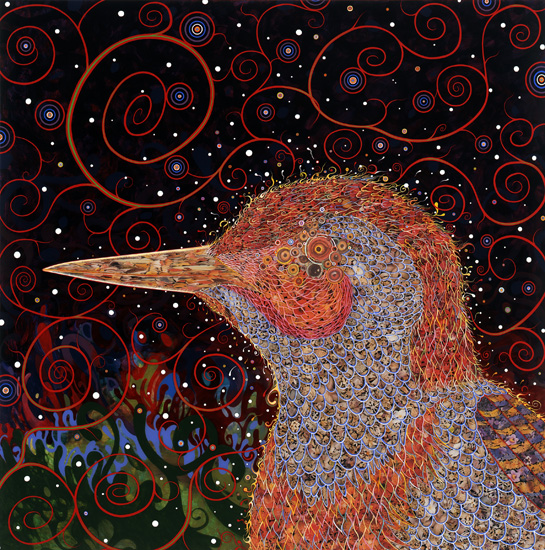
If you visit the Virginia Museum of Fine Arts’ new 21st Century Gallery, you’re sure to find visitors clustered around a painting of a large woodpecker head, peering from various angles to decipher its mystery. Fred Tomaselli’s Woodpecker (2008), below, is a recent addition to the permanent collection, and its compelling imagery and unusual process have quickly made it a crowd favorite.
Tomaselli is a highly regarded, midcareer artist based in Brooklyn, New York. He grew up in the fifties and early sixties outside Los Angeles near Disneyland, and credits both with a lifelong interest in artifice and visual excess. He first gained recognition for paintings made with mind–altering substances, including pills and cannabis leaves, often worked into dense optical patterns.
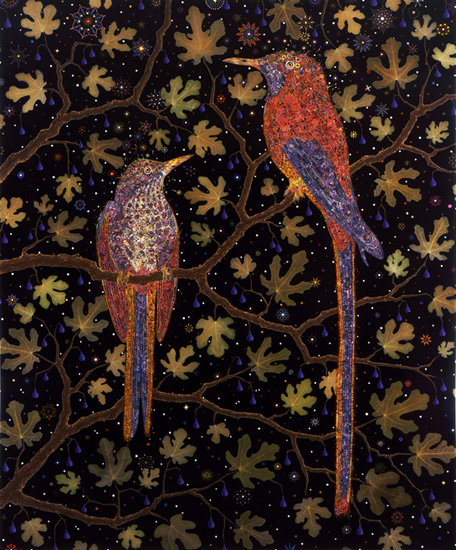
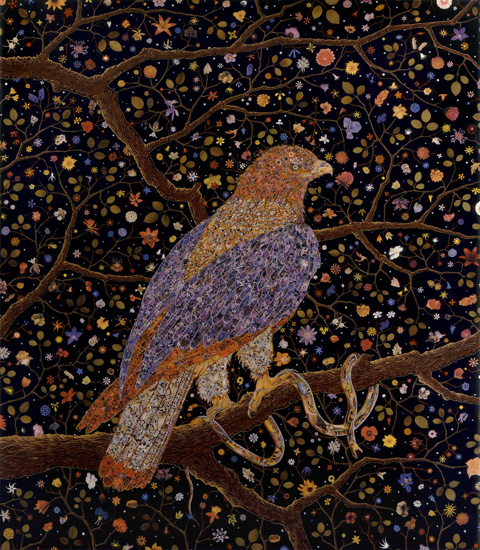
Woodpecker belongs to a recent series of magnificent birds that Tomaselli posits as surrogates for humans. They also reflect his deep interest in and love of nature. Here are some others:
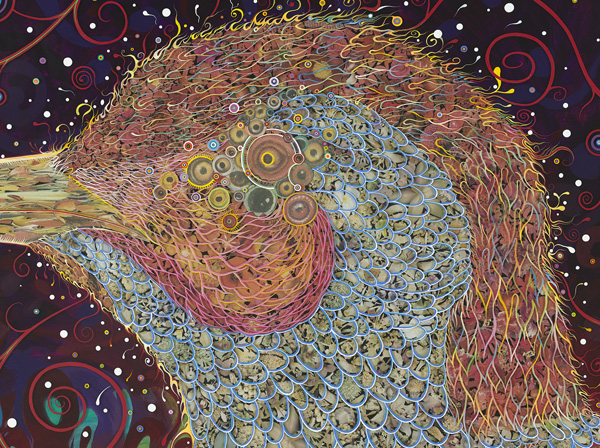
Tomaselli builds his work in layers. If you look closely at the detail below of the head, you can see hundreds of collaged images of flowers and eyes beneath the painted outlines.
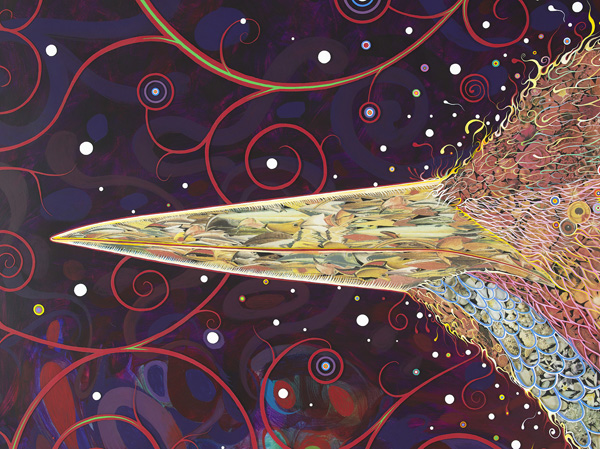
Tomaselli regularly clips these images from magazines, catalogues, and field and stream books, and then sorts and saves them for future use. After gluing them to a loosely–painted wooden support, he coats them in a thick layer of clear resin, like insects preserved in amber. Here’s a detail of the beak, made with found images of hundreds of tiny bird beaks.
Over the top of the resin, Tomaselli adds another layer of paint, embellishing and elaborating the forms below. The overall effect is a complex overlay, akin to those clear plastic pages in anatomy texts showing skeletons beneath musculature beneath veins.
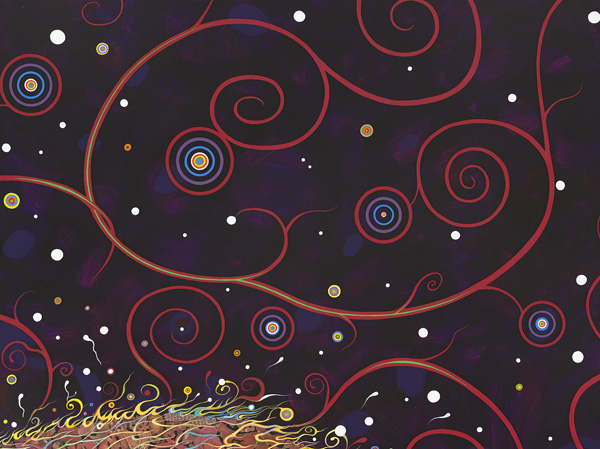
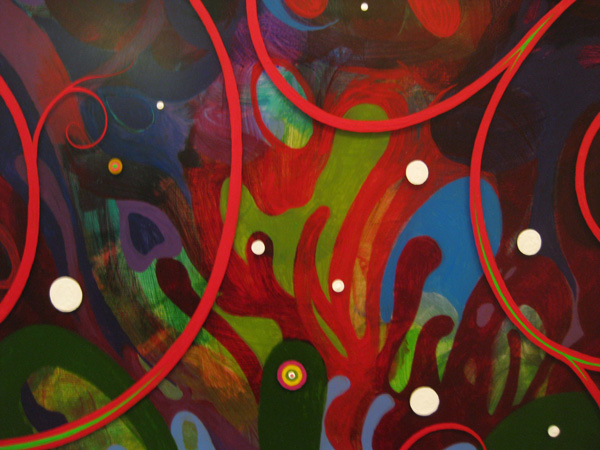
In addition, the painting is filled with geometric and nature–inspired patterns. Here, just above the head, colorful concentric rings with connecting tendrils against a dark ground evoke a celestial event.
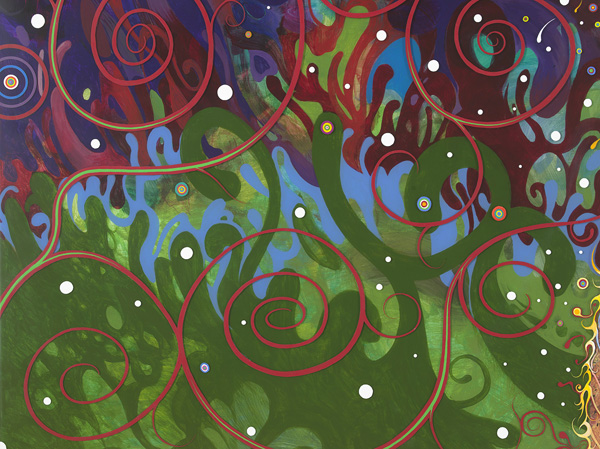
And here, near the bottom, brushy underlayers of paint nod to Abstract Expressionism in their vigorous handling, and suggest both plant and flame.
Tomaselli’s love of bright color and ornamentation evokes many traditional styles, including South Asian, Byzantine, and Art Nouveau. Here by way of comparison is a detail from a Tibetan Thanka painting from VMFA’s collection.
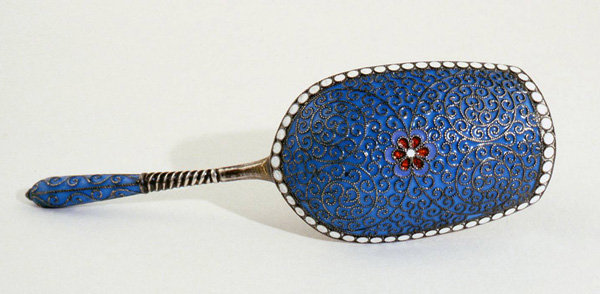
And here, also in VMFA’s collection, is a Fabergé cloisonné enamel sugar shovel, with a remarkably similar pattern to parts of Woodpecker.
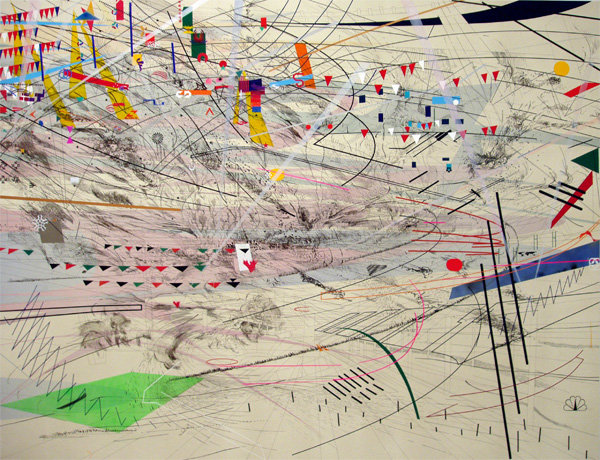
The heightened opticality of Tomaselli’s work also relates to more recent trends. Rejecting Minimalism’s simplified shapes and reduced compositions, many young artists explore complex imagery made by dense layering of disparate forms or building with repeated simple units. Two recent additions to VMFA’s collection make the point. Julie Mehretu’s twelve–foot–wide painting called Stadia III combines architectural plans, corporate logos, geometric shapes, and gestural drawing into a spectacular whole.
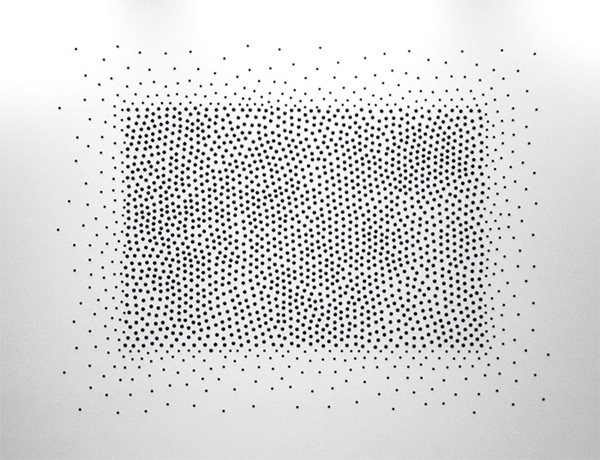
Teresita Fernández’s Projection Screen—made of hundreds of pieces of polished black onyx adhered directly to the wall—evokes the cinematic screen as well as an expanding and contracting night sky.
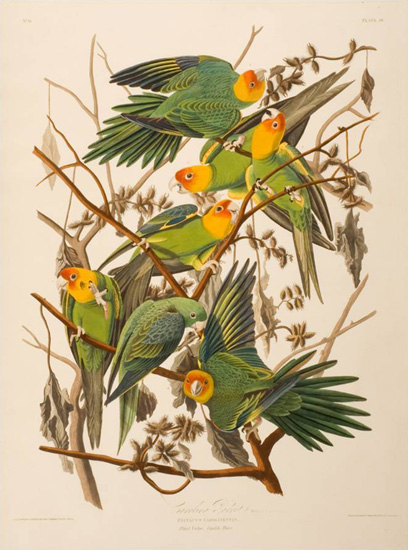
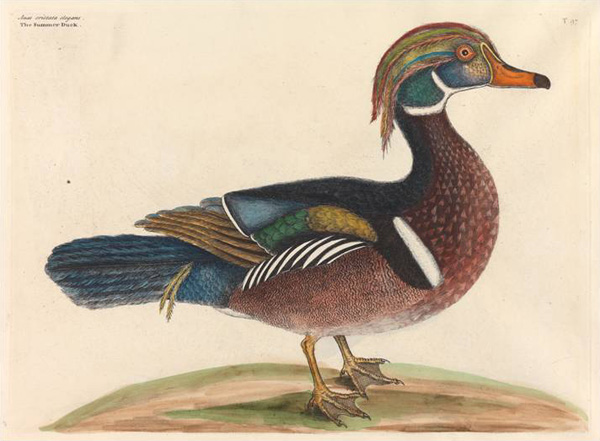
Tomaselli’s respect for nature and its species also relates him to a naturalist strain, represented in the museum’s collection by works such as Audubon’s study and Mark Catesby’s Summer Duck .
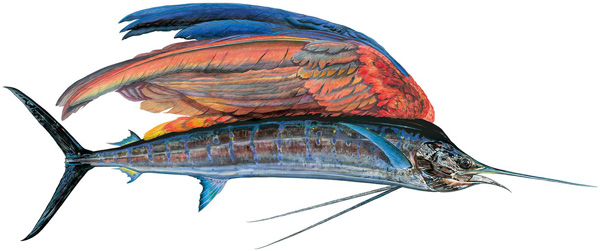
Sailfishe , the museum’s recently acquired eleven–foot–long sailfish with parrot’s wing by James Prosek, both continues and departs from the naturalist tradition. The piece makes another interesting comparison to Tomaselli’s Woodpecker in presenting nature in a spectacular, fantastical, and monumental manner.
For the past ten years, I’ve pursued work by Tomaselli for VMFA’s permanent collection. Due to his labor–intensive process, he produces very few museum–scale pieces each year, leading to high demand for limited output. I’m pleased that we’ve acquired this magnificent painting for the enjoyment and education of visitors to the Virginia Museum of Fine Arts.