 Blackbird Archive
Monumental Sculpture by Sol LeWitt
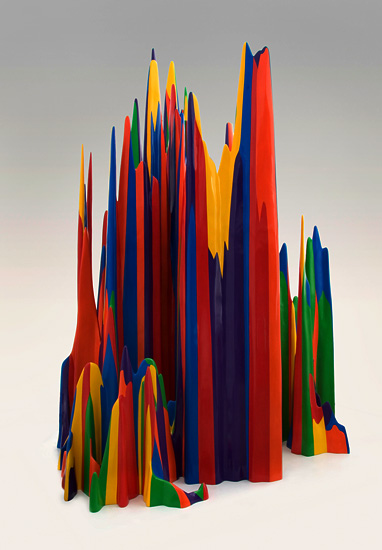
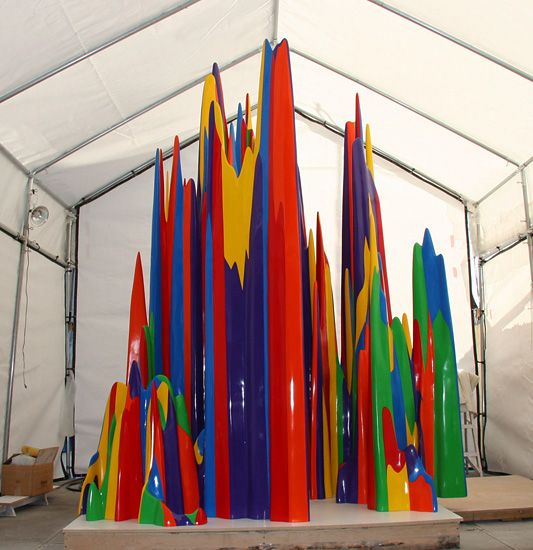
A recent purchase by the Virginia Museum of Fine Arts (VMFA) gives us a broad representation of Sol LeWitt’s career and adds an important and beautiful sculpture to the museum’s holdings. The work stands more than twelve feet tall and belongs to a series of colorful non-geometric forms that LeWitt called Splotches —a playful word he coined that reflects their bright colors and exaggerated forms.
Sol LeWitt (American, 1928–2007) Splotch #22 , 2007 Acrylic on fiberglass ca. 148 x 96 x 86 inches Virginia Museum of Fine Arts, Richmond The Sydney and Frances Lewis Endowment Fund, and partial gift of the artist and Pace Wildenstein in honor of Frances Lewis and in memory of Sydney Lewis © Virginia Museum of Fine Arts and courtesy of the estate of Sol LeWitt
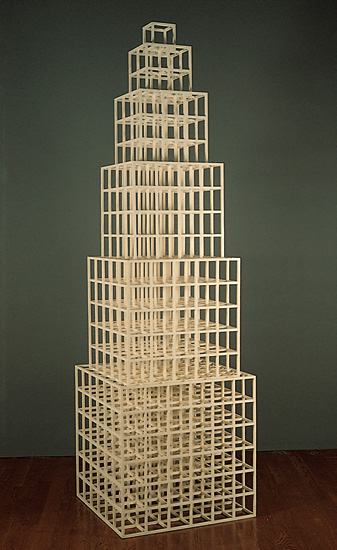
Splotch #22 is the largest and most complex of these pieces. It is also the last, as LeWitt died in April 2007, during its fabrication. LeWitt is internationally acclaimed as the founder of Conceptual Art, a movement that began in the 1960s and emphasized the idea or concept over the finished object. VMFA owns three other works by LeWitt that show the evolution of his art. The earliest is a classic open cube sculpture.
The title— 1 2 3 4 5 6 —indicates the work’s structure: six tiers of cubes based on the single modular unit at the top. By the bottom tier, the cube is made of six by six by six of these units. It’s a straightforward execution of a simple idea—just the way LeWitt liked it. But the results are far from simple. The finished work combines fragility with monumentality and clarity with complexity (a viewer circling the piece sees a kaleidoscope of shifting views into and through the structure).
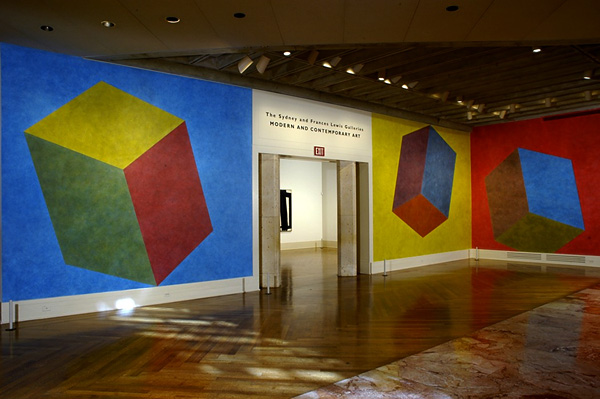
The next piece in VMFA’s collection is a four-part “wall drawing” (you see only three parts here). It’s made of colored ink washes rubbed directly onto the plaster wall with soft cotton cloths, giving the appearance of fresco. The piece was first made in 1987 for a temporary exhibition, and then painted out.
When VMFA bought the work in 1999, we received only instructions and a certificate of authenticity. We had it installed by LeWitt’s draftspeople and art student helpers.
This approach rejects the conventions of the unique art object: the wall drawing can be repeatedly installed and de-installed; it can even exist in more than one location at the same time. In addition, the artist need not install the work himself, dismissing the high value traditionally placed on personal subjective expression. LeWitt likened his wall drawings to musical scores or architects’ plans, reminding us that we don’t require the composer to play first violin nor the architect to lay the bricks.
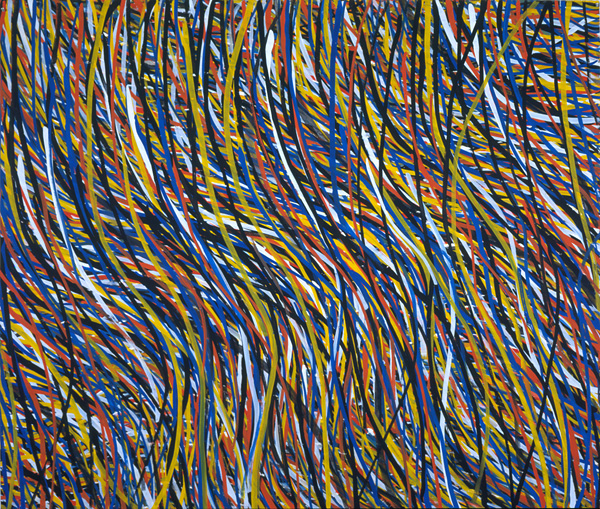
For most of his career, LeWitt was closely identified with geometric and rectilinear forms. In the mid-1990s, however, LeWitt’s forms began to loosen. You can see this in the large gouache painting—an opaque water-based medium—that VMFA acquired last year directly from the artist’s personal collection. Wavy hand-painted lines in primary colors and white and black stretch from edge to edge of the six-foot-wide image, creating an energetic field.
By the end of the 1990s, LeWitt began exploring irregular shapes in three dimensions. At first he simply called the sculptures “non-geometric forms.”
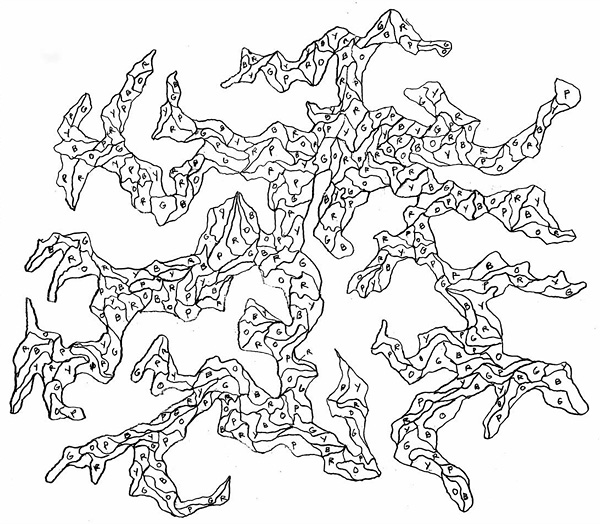
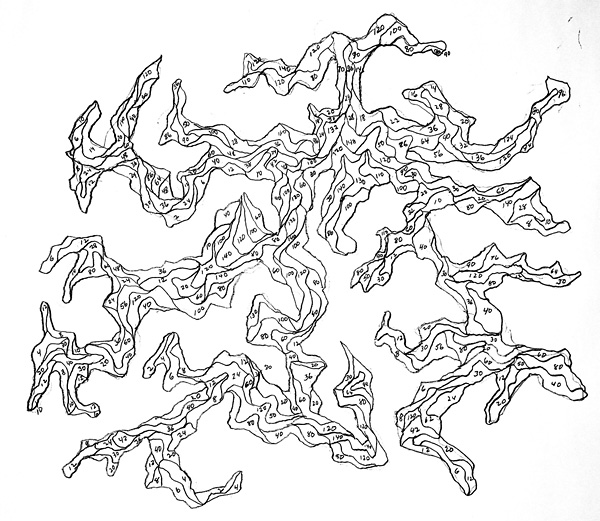
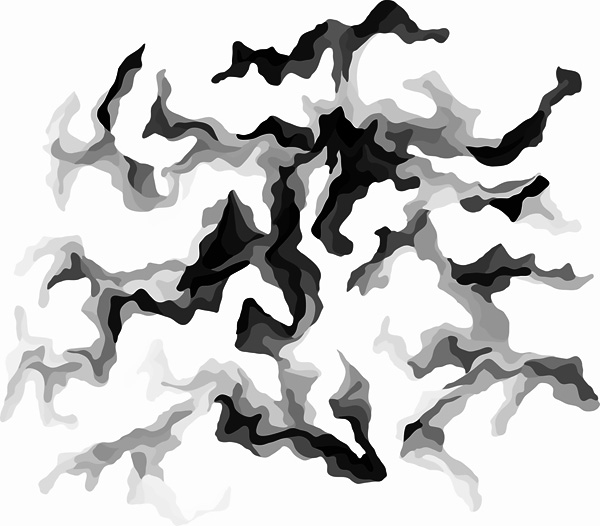
By 2005, when LeWitt conceived the large sculpture that VMFA acquired, the non-geometric forms had become much more complex. These two drawings are the footprint, or floor plan, for our piece. The first one has notations showing the primary or secondary colors for each section. The second one shows height in inches for each section.
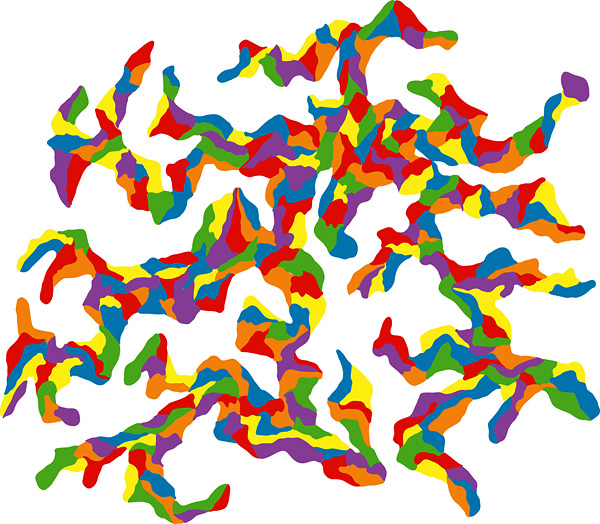
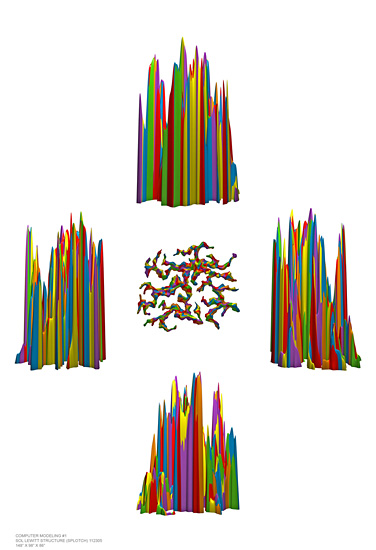
LeWitt sent both drawings to his fabricator in Brooklyn. Here’s the fabricator’s computer translation of the color notations and height notations (darker = taller).
Then, using 3-D computer modeling software, the fabricator began to visualize the footprint as a three-dimensional forma and view it from several angles.
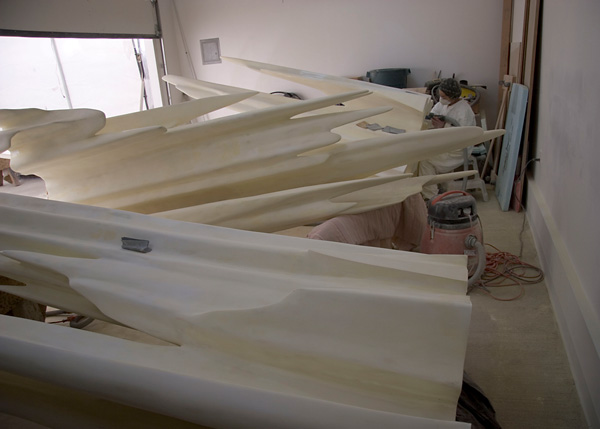
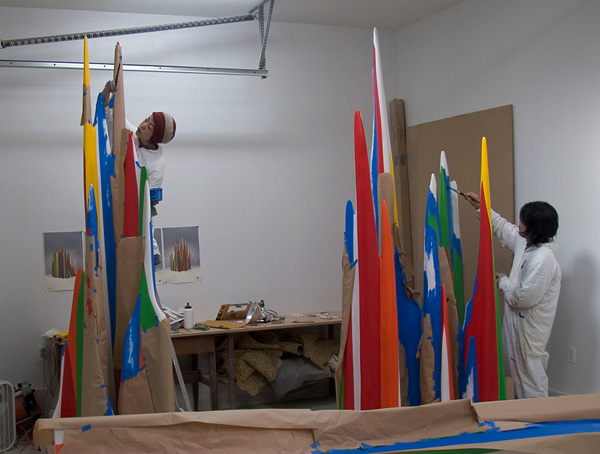
Soon construction began, using stacked, laminated, and carved industrial foam and a coating of fiberglass and epoxy.
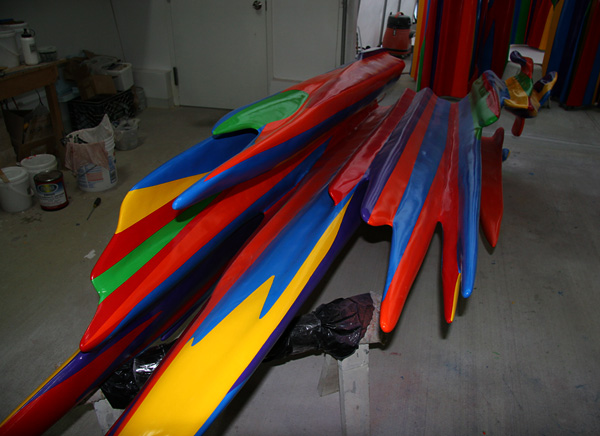
Once LeWitt had approved the form, the hand-painting began.
Multiple layers of paint, sanded in between coats, polished, and protected under a clear sealer, created a bright, glossy finish.
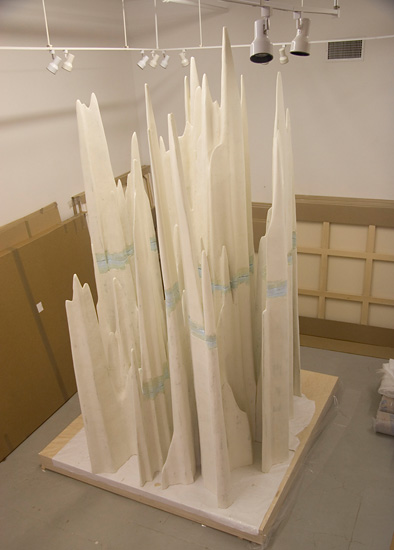
The finished piece (seen below in the fabricator’s shed) has a spectacular presence. Its dense cluster of pinnacles suggests gothic spires, alpine peaks, or stalagmite formations. Joined to the cheerful primary and secondary colors, and standing more than twelve feet tall, it has a colossal and exuberant impact.
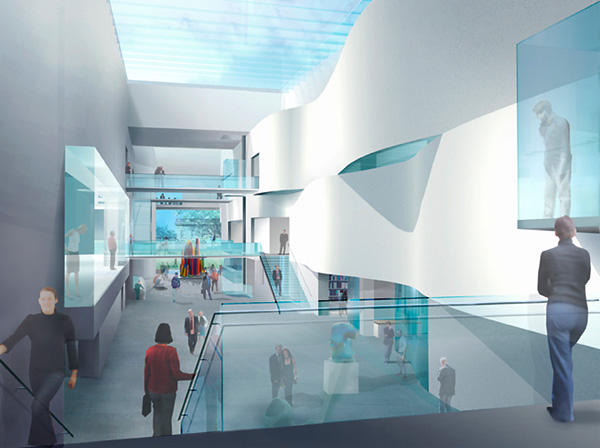
Splotch #22 will have a prominent location in VMFA’s new wing—currently under construction and scheduled to open in late 2009. In one possible scenario, it would anchor the future Atrium, seen below with the piece inserted into the architect’s rendering at the far end towards the future Sculpture Garden.
This stunning work of contemporary sculpture will no doubt create a memorable icon for our new central public space and a joyous welcome to our visitors.