 Blackbird Archive
Smoke and Water
Smoke and Water
My experimentation with applying “smoke” imagery on paper (and other surfaces) began in 1989 and developed directly out of my collaborative experiences working with John Cage at Mountain Lake in 1983, ’88, ’89 and ’90.
Cage had employed fire marks in his work at Crown Point Press in Oakland by “branding” paper with a red-hot cast-iron teapot and by placing pieces of burning newspaper on print paper and then quickly passing everything through the printing press. The challenge at Mountain Lake workshop was to develop new techniques more suitable to large pieces of paper and to extend the potential organic range of this imagery in correspondence with Cage’s ongoing development of the New River watercolors.
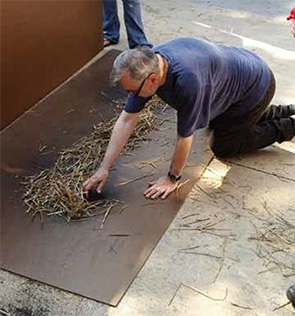
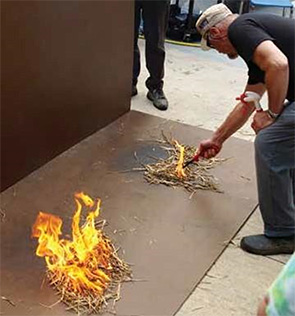
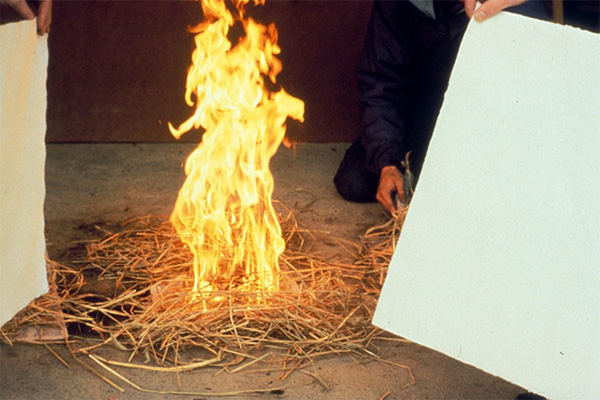
We decided not to create the dark carbon marks that can be obtained by applying an acetylene torch with a low oxygen mix (as Yves Klein had done in his “fire paintings”). Instead we decided that a more natural, organic quality was desirable and experimented by burning dried weeds and grasses, hay, straw, discarded cloth—even steel wool. I discovered that clean, dry straw created the most distinct linear impressions and also imparted a rich range of warm tones to the paper.
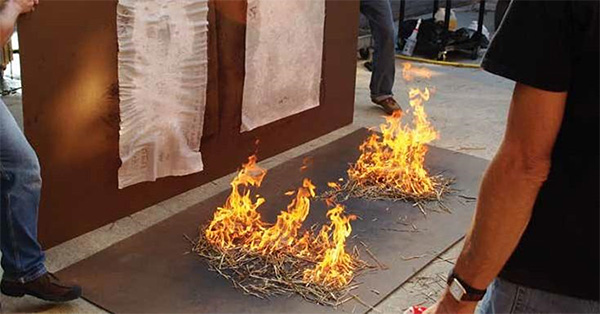
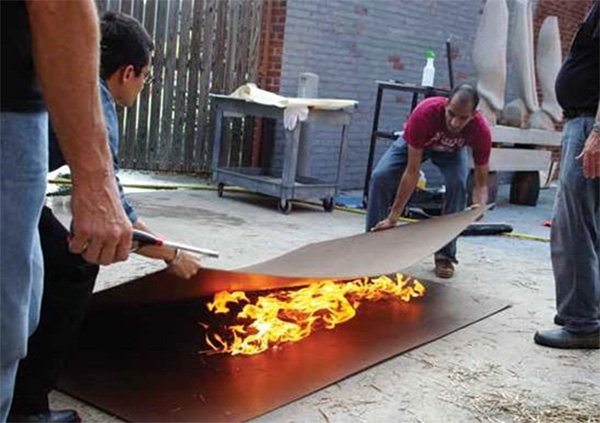
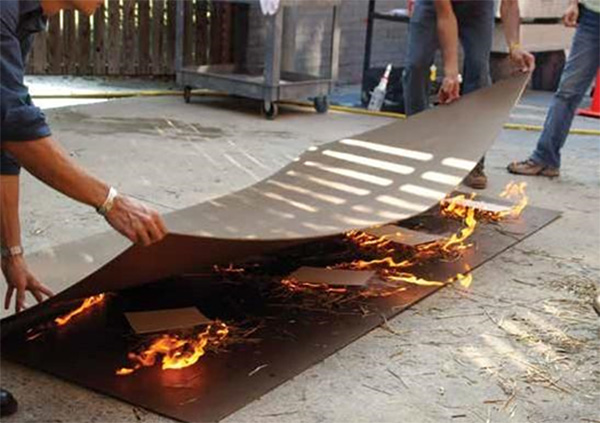
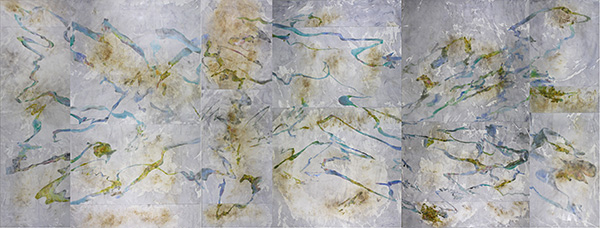
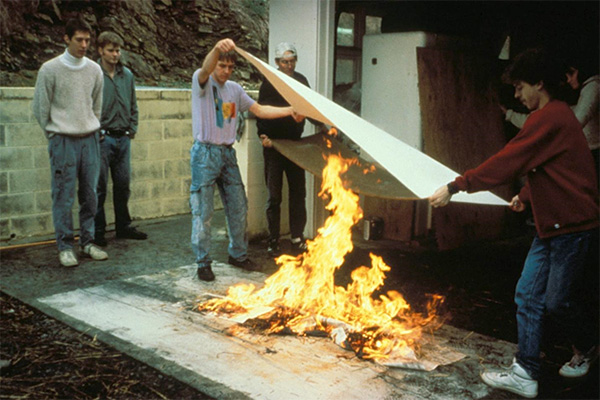
After 1990, I discovered that it was possible to achieve more detailed smoke patterns and linear elements on the paper through repeated applications of the process. But before actually smoking the paper, I also began applying as many as seven or eight thin watercolor washes containing mica powder and pale, metallic hues to the paper, allowing distinct patterns of watermarks to dry into the paper to create another level of imagery. “Smoking” Process: Dampened paper is quickly laid down over small patches of burning straw on a prepared Masonite* platform, and then the fire is immediately suffocated by laying another sheet of Masonite on top of the paper).
The degree of wetness of the surface of the paper can determine a variety of effects in the resultant imagery. When the fire is completely extinguished, the papers are lifted from the Masonite, rinsed, and pinned to a rigid surface where they dry out and stretch and finally are wiped or polished with a cotton or wool cloth The process requires five or six participants to run safely and efficiently.
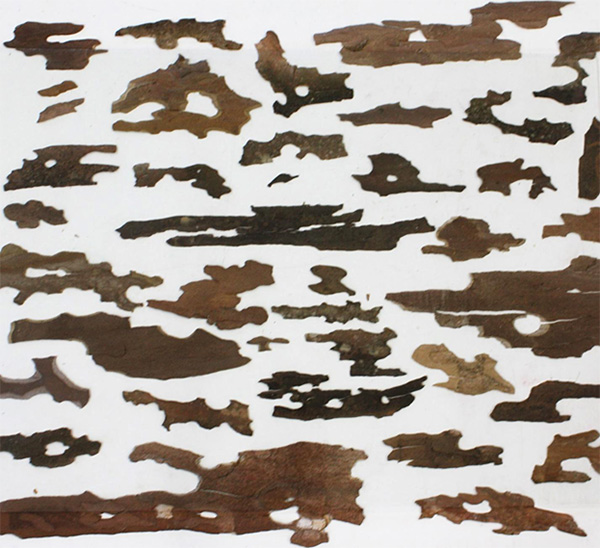
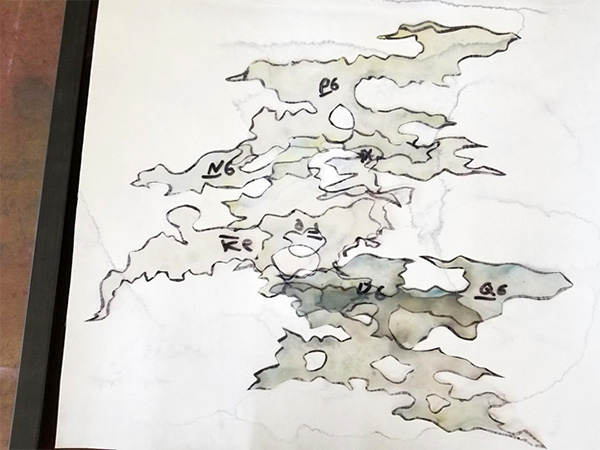
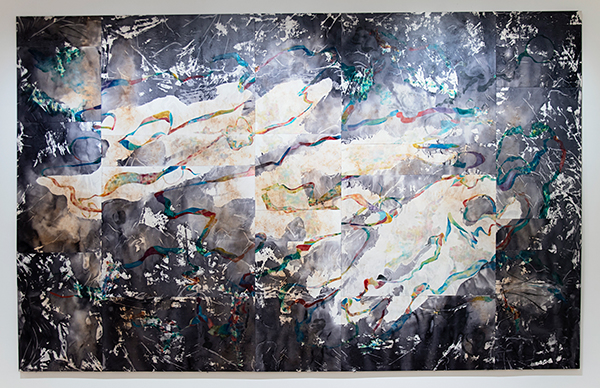
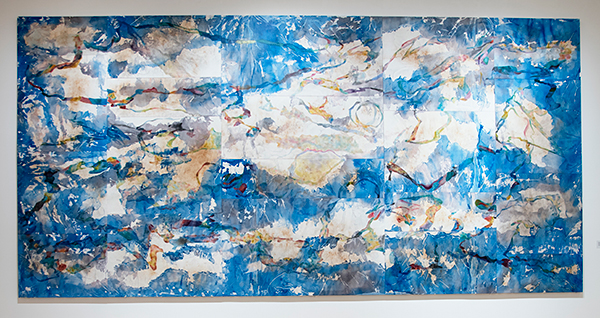
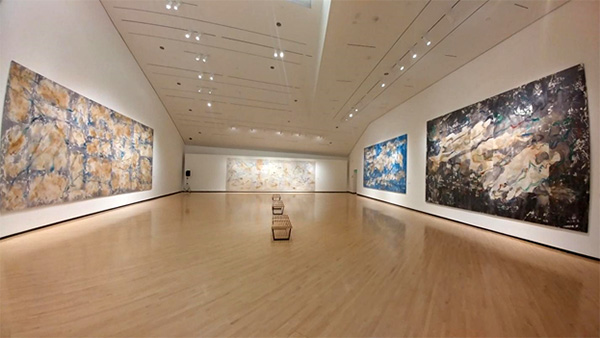
The linear elements in my large Notation—many-paneled (Polyptych)—paintings derive from the contours of exfoliated sycamore bark, randomly gathered while walking my dog beside the Roanoke River running through [on] my [southwest Virginia] property[.]
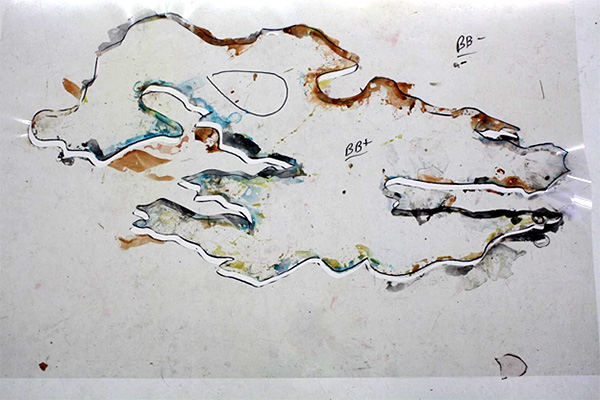
[The bark is] drawn-around on tracing paper, and then selectively enlarged on a studio wall by an overhead projector, and rendered as big shapes on thin .001 ml prepared acetate that are then cut-out, resulting in positive and negative shapes that I later use as large stencils.
Placing the positive and negative patterns of the stencils onto pre-cut papers assembled on the studio floor, I establish the basic linear patterns that might appear in the overall painting and a drawing is made of their configuration on the grid-like panels.
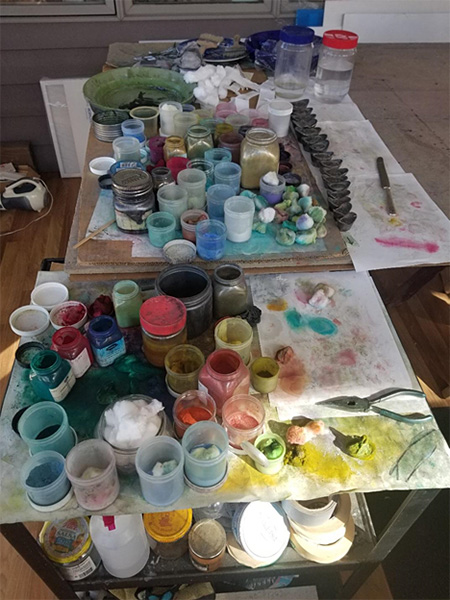
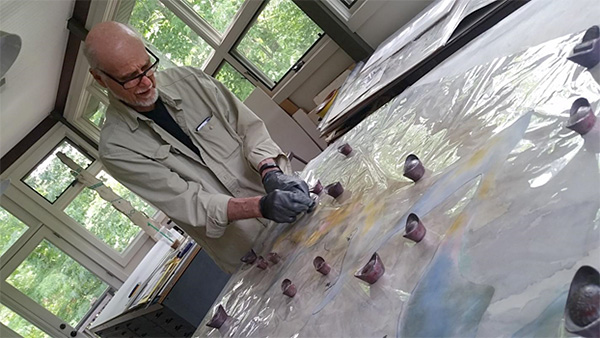
I apply the color elements in the paintings by rubbing dry pigments into a clear oil emulsion wiped onto the surfaces of the heavy rag papers which have been individually placed on a large table.
To prepare for this application the paper has been first toned with mica-powder infused water with a light mixture of Winsor Newton Neutral Tint watercolor added and soaked until distinct puddles form—which are then removed with a wide damp brush—creating various white forms and subtle gray lines.
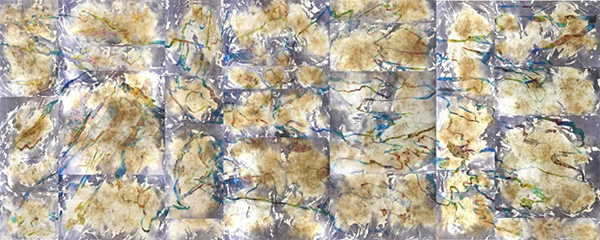
Then the paper is cut into the panel sizes for the painting which are subsequently "smoked" in small straw fires with the help of student and community volunteers—establishing a distinctive “smoke” imagery on the sheets.
This workshop activity has become popular with local volunteers and usually takes about four hours.
After the "smoking", the papers are reassembled on the studio floor, the positive shapes of the stencils placed back on them, and large pieces of "voile" or synthetic thule tulle are loosely stretched over the entirety of the surface of the papers, and a final monochromatic watercolor wash is applied through this fabric scrim.
This results in extraordinary random marks imparted by the thule tulle, a subtle pixilated pattern on the surface overall, and irregular shapes in the areas covered by the stencils.
The finished painted papers receive a coating of shaved refined beeswax and are then stretched over primed plywood panels and assembled by connecting them in the back with stove bolts.