 Blackbird Archive
United by Ritual
United by Ritual
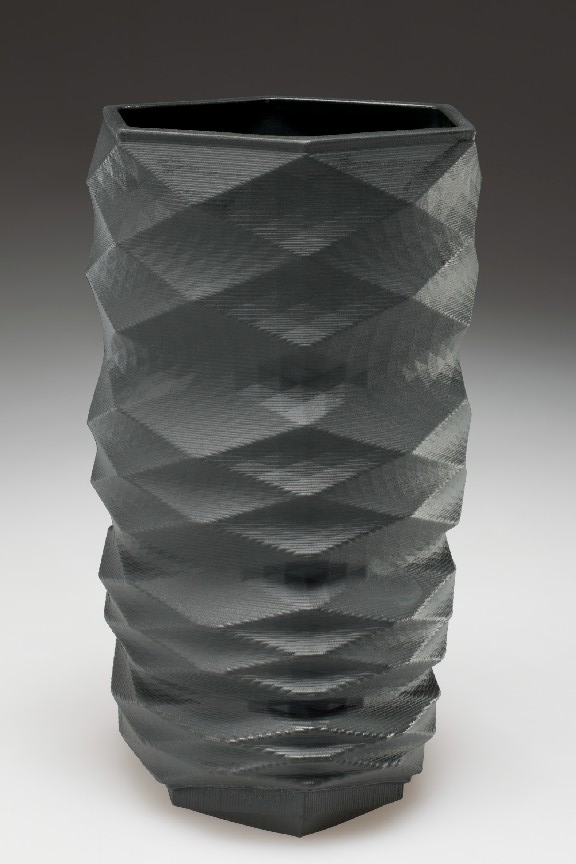
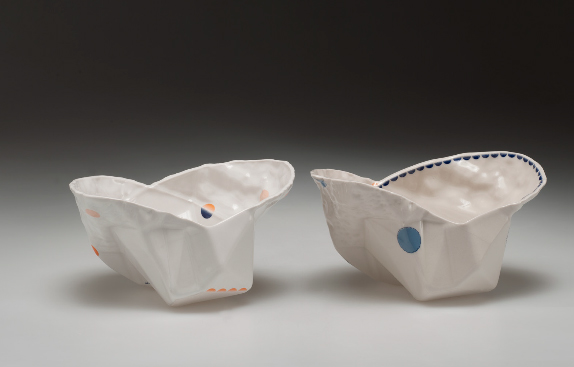
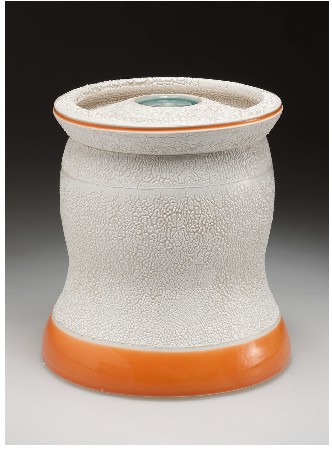
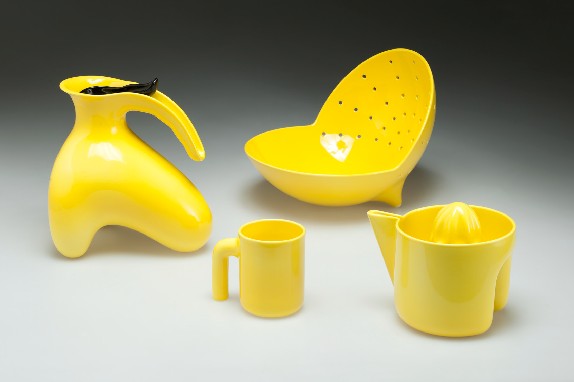
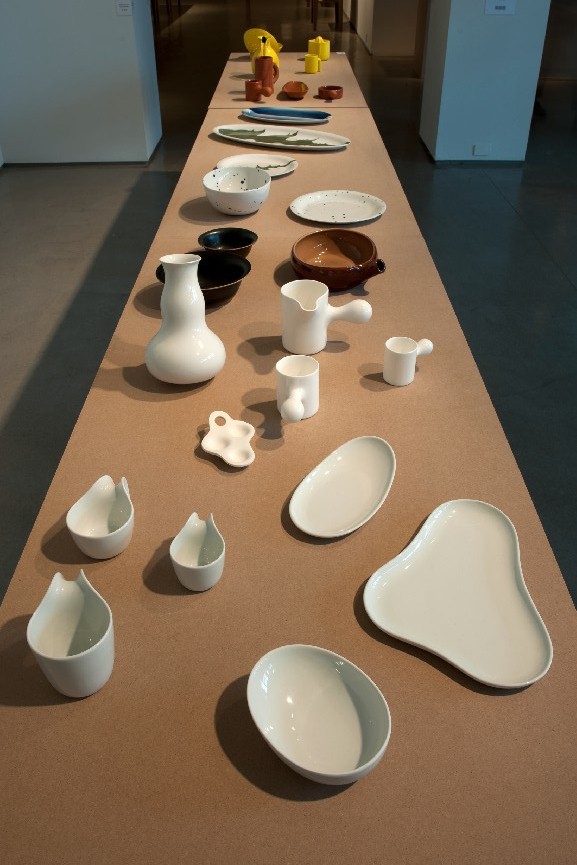
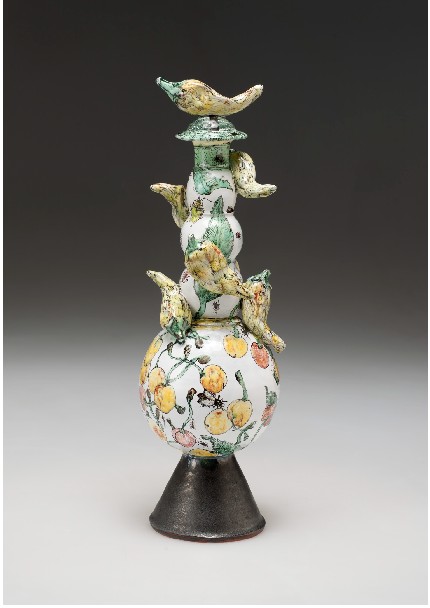
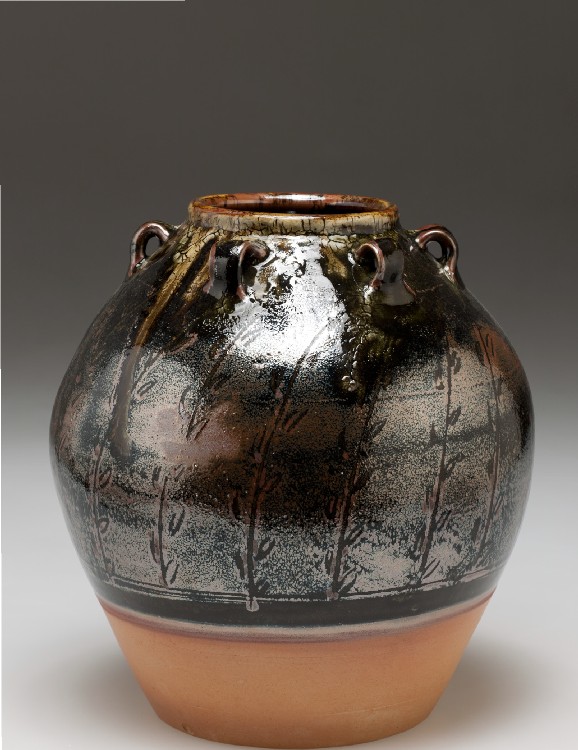
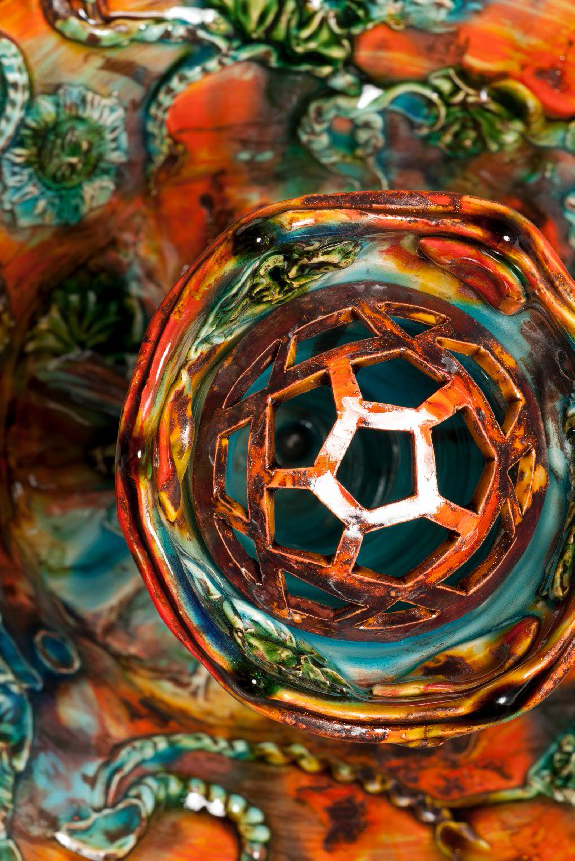
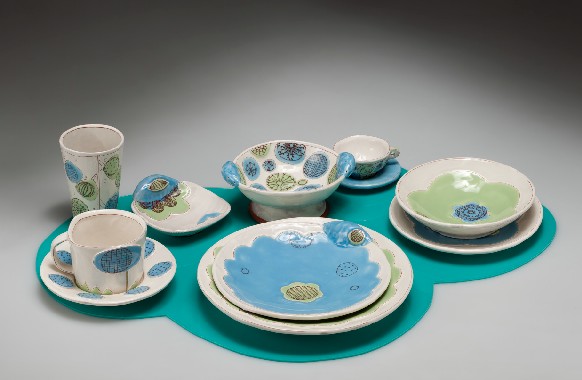
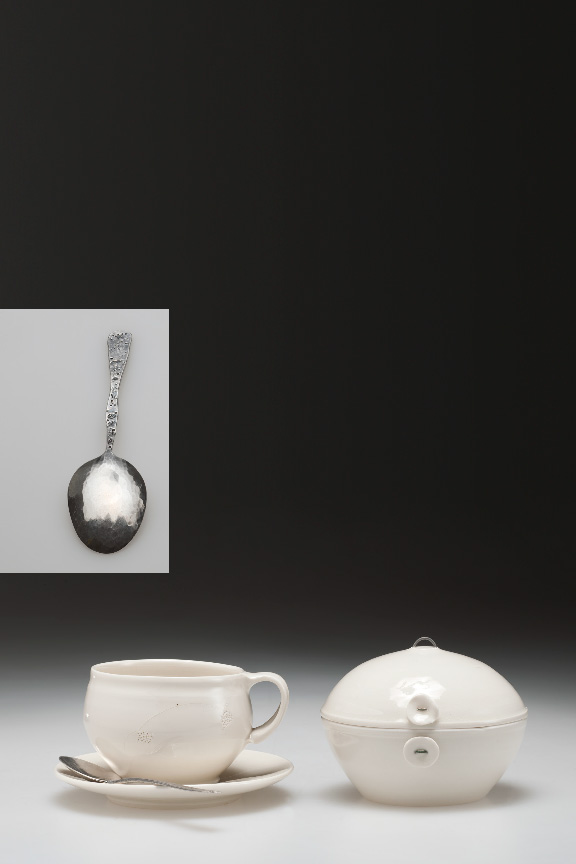
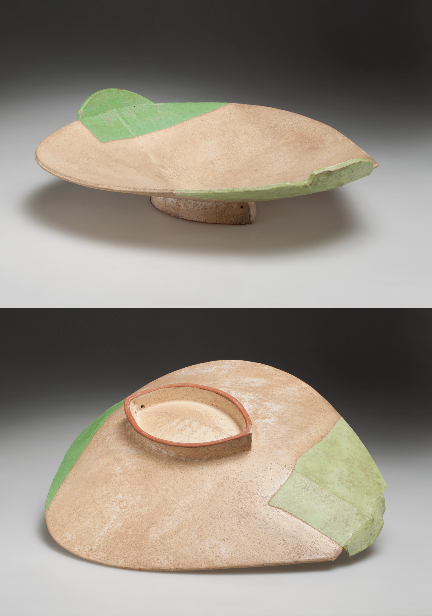
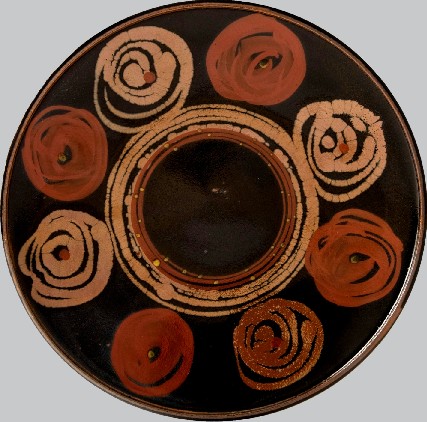
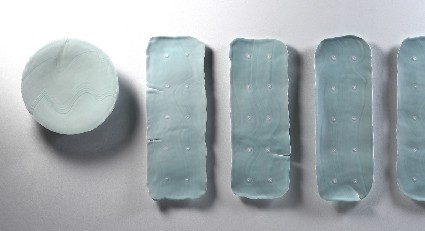
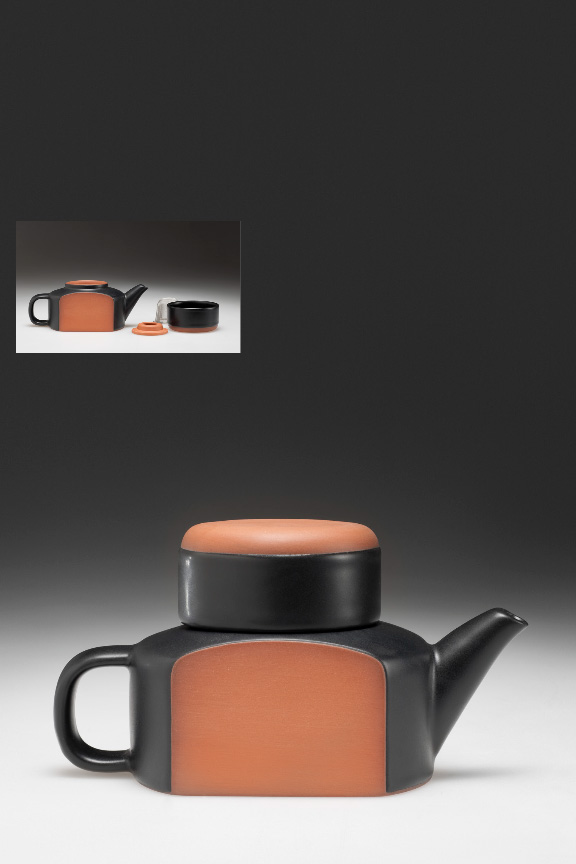
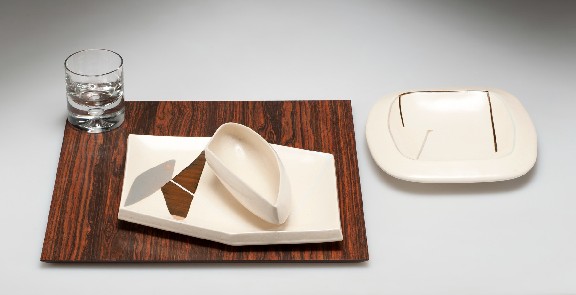
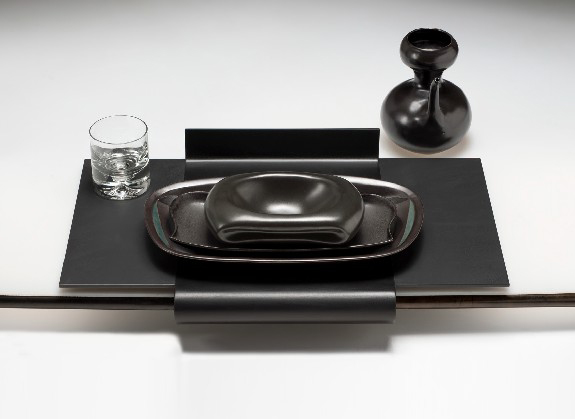
TableSpace is an exhibition of functional ceramics by fourteen artists from North America, Europe, and Asia. The works represent a wide range of artistic possibilities, certainly in terms of material and aesthetic points of view—some works are humorous; some are based in a design/machine aesthetic, even reflecting digital aids; others take their cue from historical objects as they seek to extend established traditions; still others seek an independent path by exploring material and form in new ways.
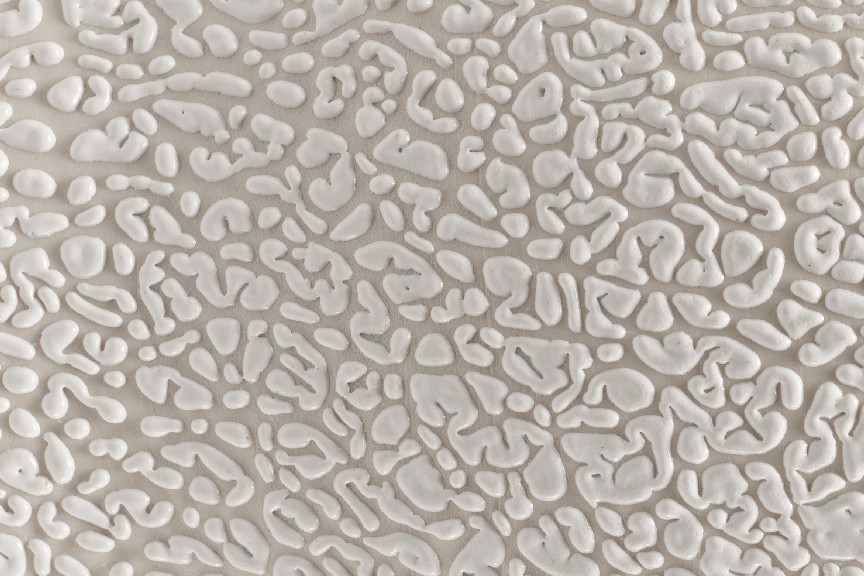
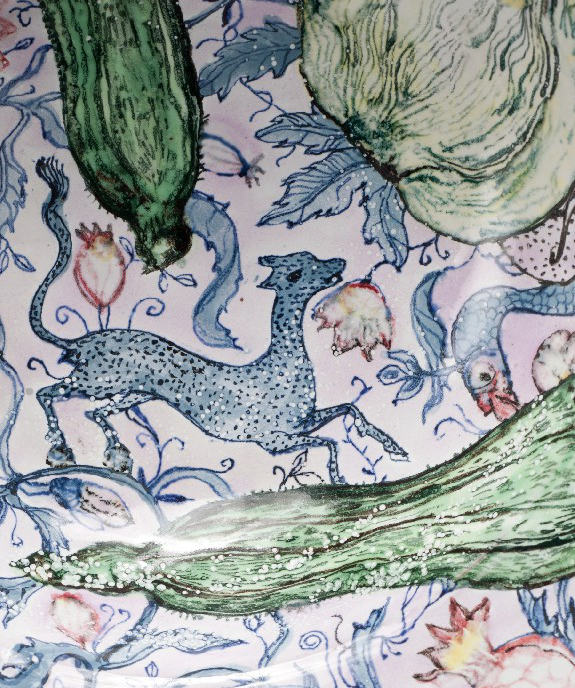
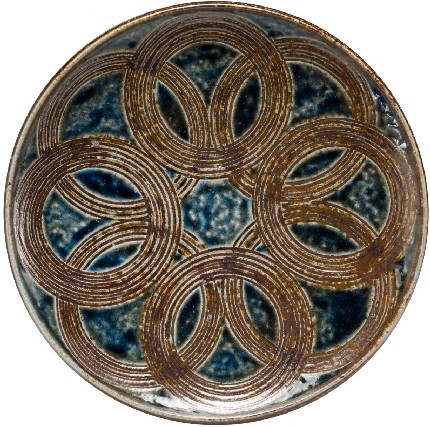
“ . . . These drawings are first created digitally through the use of a computer program that takes sensor data from the natural world and converts it into abstracted geometries. Light, temperature, humidity, and wind speed just outside my studio are used in conjunction with software to drive the specifics of the marks on the pots.” —Andy Brayman
Aside from the works themselves, the title, TableSpace , also prompts some interesting observations that have not only to do with the quality of the objects presented, but with the concept underlying the exhibition itself.
As curator Linda Sikora writes, the work in the exhibition “addresses the subject of function, and through this, implicates the site of ‘table’ or other like situations.” Her observation, it seems to me, points to the heart of the matter. For what unites all of these objects, regardless of their varied physical forms, is that all of their makers seem drawn to a similar idea of table. That is, they see it as a specific kind of space—a specific locale, if you like, wherein their objects exist as participants in a very important and very human drama. In other words, to these artists this locale is more than just that physical space marked out by the literal plane of a tabletop. To them its dimensions are grander, linked more to a philosophical-humanistic concept than to anything as simple and clearly defined as a tangible, concrete space.
While the roots of this concept are buried somewhere deep in our collective consciousness, we can begin to understand something of what is involved here if we remember that nourishing the body through food and drink is arguably the most basic of instinctive drives. The need for nourishment, after all, begins at birth (in fact, before birth) and continues until death. That humans share this primal instinct with all other living things on the planet underscores its importance. The instinct for nourishment is a primal, a priori instinct, not something learned through socialization.
In other words, it is not a cultural construct and hence something we can embrace or dismiss at will. Rather, it is an involuntary, unreasoned action (e.g. eating) as a response to certain stimuli (e.g. hunger). Thus in a very real sense, it is nature guiding our actions, nature speaking directly to us through our bodies. In this sense we cannot speak of a human nature—there is no such thing. Human and nature are opposites, because humanness can only be achieved by the taming of nature (e.g. by taming that natural instinct that programs the strong to devour the weak in a quest for survival).
As an example of nature versus culture, the hunger-nourishment equation is one in which nature clearly has the upper hand. However, as the objects in TableSpace demonstrate, there is more involved here than simply giving into nature, of letting nature have its way. For even though we cannot resist nature’s imperatives, we have been able to transform this specific imperative into something beyond mere nature. We have been able to make it into an element of culture, and thus an expression of our humanness standing in opposition to nature.
The question is, of course, “In what way is the table a cultural expression of our humanness, as apart from, say, simply a platform upon which to place certain functional objects?” How does it differ, for example, from something like the gallery pedestal to which it seems related? For one thing, the gallery pedestal is designed to display objects so that they can be best seen by a viewer, usually one who is standing. This requirement determines both the pedestal’s shape and its height.
Another difference is that objects and pedestal remain separate entities, one being little more than a prop for the other; there is no intentional interaction between the two, neither physical nor psychological. The tabletop, on the other hand, is a place where certain types of functional objects are intended to be used; it is use that determines the table’s shape and height. Also, unlike the gallery pedestal, the tabletop implies both use and user and, therefore, a physical and psychological connection between itself and object and between use and user. Because of this, the tabletop must be understood as more than just a physical support for objects, it must be understood as a conceptual space, a site, a locale, in which something happens with and through certain types of objects: platters, plates, cups, pitchers, etc. Furthermore, this something happens according to specific rules of behavior that have a social dimension to them because they involve social interaction.
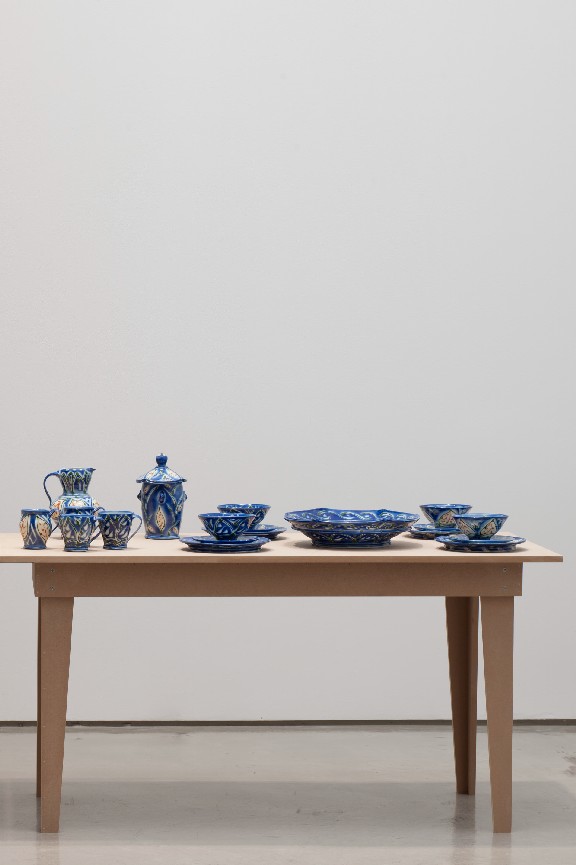
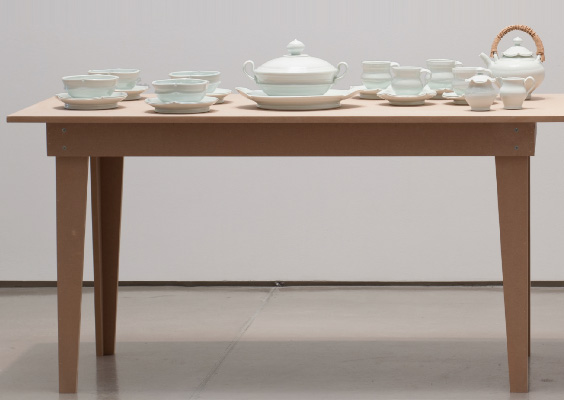
It is this sense of social interaction that forms the philosophical-humanistic concept underlying the culture of the tabletop evident in the objects in this exhibition as well as their placement. For example, there are matching sets of objects including teapots and teacups as well as matching pitchers, plates and platters; there is even the pairing of objects and the arrangement of objects into place settings. All of this implies multiple users and thereby underscores the tabletop as a site for social interaction, as that place where something as basic as food and drink are shared with others.
This sense of sharing pervades the objects in TableSpace and is part of a very human ritual, one in which guests at table, even one’s enemies, are honored not only by being fed, but by being served first. As a ritual act which puts the other before the self, it implicitly recognizes the other as a fellow human being. This is the essence of being human, for it is man resisting the dictates of nature, man acting against nature and the natural instinct to put the self before the other. Because of this, the ritual of sharing at table, which forms the culture of the tabletop, must be seen as a metaphorical as well as a real act of communal being, one that forms the basis of the family unit as well as any larger sense of community, both sacred and secular.
In a very real sense then, the space of the table, as a communal space, makes demands on artists and participants alike. The demands it makes on participants are that they have a sense of what is proper and fitting as members of a community with others, that they comport themselves with a degree of decorum befitting the ritual in which they are participants.
For artists, the demand is to make objects whose taste and refinement communicate the metaphorical importance of this space as a philosophical-humanistic concept. That this can be done is clearly evident in the works in the TableSpace exhibition.
In their aesthetic quality and sense of propriety one can even sense faint traces of those sacred implements used in religious rituals—rituals which, interestingly, re-enact this same communal space of the table, but on the level of the spiritual; here one has only to think of the Christian Last Supper and Mass, or the Buddhist tea ceremony.
That functional craft objects can encompass all of this is no small thing, for in doing so the metaphorical demands of the tabletop ripple outward, influencing the larger society as well, all the way from the romantic dinner for two, to the royal banquet, to the official diplomatic state dinner. In this way, the functional craft object, as part of the culture of the table, takes on an importance that goes to the very core of civilized society.